July 2024
Total recording length: 00:08:35
Transcript
{ 0:00 }
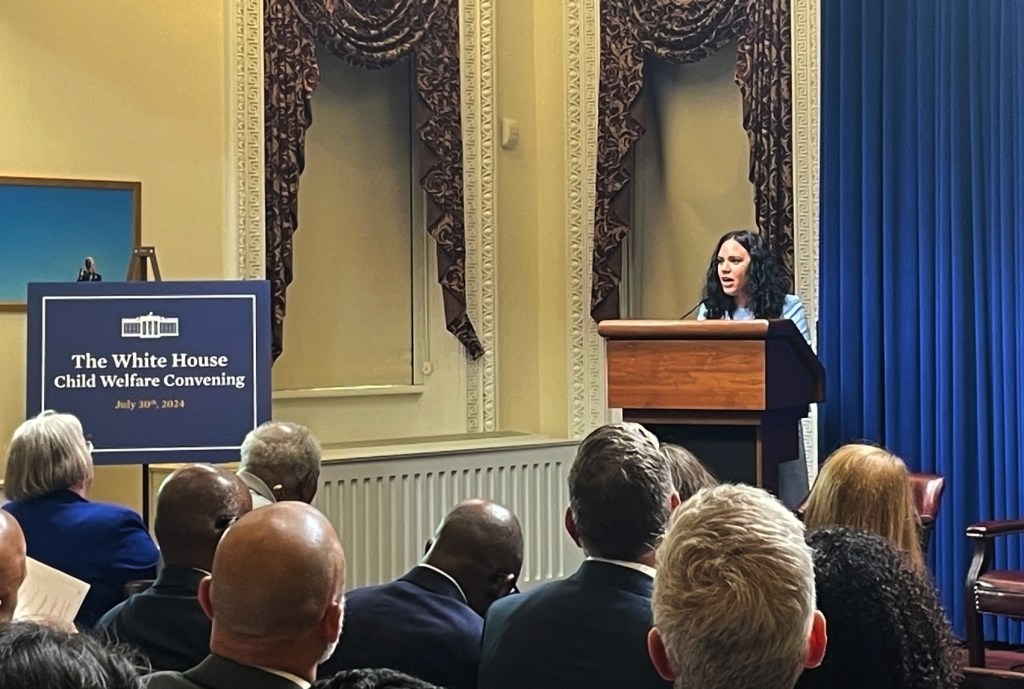
I’m excited to move us from some of our opening remarks to some spotlight conversations that help really bring these issues to life because they are occurring and happening to real people, as we say. I have the privilege of really engaging and partnering with many leaders who are dedicated to improving the lives of young people and families and I’m excited to introduce for our first spotlight talk Valerie Frost, who was one of those remarkable individuals. She’s really committed to children in the area of child care, education, special needs, safety net programs and child welfare services and has been working as a part of a national partnership with young people, parents and families who have experienced the child welfare system. Please join me in welcoming Valerie Frost from Kentucky.
Like most of us, I can’t be described by just one thing. I can start with my name, Valerie Frost. I come by way of Kentucky. I have a bachelor’s degree in early childhood education and a master’s of education with a specialization in reading literacy. I’ve worked with infants and toddlers, the Head Start program, and kindergarteners for more than 10 years. But nearest and dearest to my heart is that I’m a mom. I have 3 little ones 7 and under, a 7 year old set of boy girl twins and a sweet 2 1/2 year old little girl. I am also a suspected child abuser. In fact I’ve been investigated by Child Protective Services, or CPS, multiple times.
{ 1:56 }
The first time it happened, I was 30 years old and the twins were two. My son was in the hospital when a roughly 22 year old recent college graduate whose last job was at Applebee’s and was now a CPS worker charged in the room armed with a checklist of risk factors. The first words out of her mouth were,” Where’s the children’s father? Where’s your family? I’m deeply concerned about your lack of a support system.” That’s when she shoved a safety plan in my face- just one piece of paper between me and the potential for my children to end up in foster care. When I refused to sign, the first of many threats to get a court order for removal followed. What were these set of risks that had her so sure I was harming my children? Children zero to three of age? Check. Premature birth? Check. Multiples, or twins birth? Check. NICU stays? Check.
{ 2:58 }
Colic? Check. Developmental delays? Check. All of these considered factors that increase the stress levels of a parent. That, coupled with me living in public government housing at the time, was all she needed to have me profiled before she even met me. And her solution was to take the kids from me, or potentially take the kids from me, and place them in foster care. Here’s where context is important. I did check off those boxes, but I am the furthest thing from a child abuser. I had a high risk pregnancy, severe morning sickness and complications. My water broke at 26 weeks and my son was born critically ill. Shortly after he was born, the hospital sent palliative care to talk to me about the possibility of only going home with one of my babies.
{ 3:54 }
And now here we were, two years later, back at the same hospital where my son was born and survived. We returned due to an expected ongoing medical challenge stemming from his complex birth, only for me to once again face the possibility of only taking one of my babies home, or possibly this time, none. I was offered no support and I think it’s important to know that had my children gone to foster care, the foster parents would have received a per diem- daily rate of pay, medical insurance for the kids, daycare tuition assistance for the kids, trainings, support groups, maybe even free bicycles for the kids around the holidays. Did you know that 53% of Black children are investigated by CPS by the time they turn 18? My kids, actually all three of them, have met this statistic by the age of three as Black children. It doesn’t have to be this way.
{ 4:58 }
What if the child welfare system was set up differently? What if a call to the hotline for a report was an act of kindness? What if concern came from a place of care and not judgment? What if we tossed the checklist of risk factors and instead viewed well-being gaps as opportunities for support? What if we reserved the foster care system for truly indisputable scenarios of physical and/or sexual risk? What if we made sure that all families belonged and all families made it-together-and equipped them with the resources to do that without removing children from their parents and homes? Let’s go back to the hospital. Same worker, same checklist, same questions. Where is the children’s father? Where’s your family? I’m deeply concerned about your lack of a support system. On this piece of paper, I have a list of ways that I can help.
{ 6:00 }
Where do I start? What could the new checklist look like? Could mom use respite care? Check. Can we give Mom a gas card for transportation to and from the hospital? Check. Can we set Mom up with a meal train while her son has a hospital stay or for the first few days returning home? Check. Could we pay Mom’s medical bill? Check. Could we find support groups for Mom for parents of children with disabilities or medical needs? Check. Can we sign Mom’s kids up for free bicycles around the holidays? Check. Who knows better what parents need than parents themselves? We don’t have to make this list up. We can ask parents what they need. There are many parents with lived experience with the child welfare system- parents like me-who would love to be heard so decisions for families can be made by families.
{ 6:56 }
My vision of what support in communities could look like would be partnerships between local businesses, retailers and community organizations to be proactive about having what families need readily available or providing extra to those who need more. Existing nanny services could offer subsidized slots for emergency or overnight care. Mainstream clothing retailers could offer income based vouchers. Hotels could offer temporary housing to those between homes. Banks could offer free or low cost financial counseling. We could connect all public, private and faith-based entities and break silos. I want to end with a quote by Susan K Gardner. Equality is giving everyone a shoe. Equity is giving everyone a shoe that fits. All parents deserve support with their children. Some may have opportunities that support to fit a little better.
{ 7:56 }
With the right size support, we can end the cycle of family disruption and preventable harm. Parents are more than case numbers, they are more than risk. The next time you find yourself judging a parent, consider what you could do to help or just ask, “Where do I start?” Thank you.
Thank you so much, Valerie. It’s going to be a tough act to follow.
— End of transcript —
 Valerie Frost
Leave a comment